Table of Contents
You can invest in strong security tools and still end up with a costly breach because one employee clicked the wrong link.
That is why cybersecurity awareness matters. It is not about turning every employee into a security specialist. It is about helping people notice risk in ordinary moments, pause, and make better decisions before small mistakes become major incidents.
Understanding Cybersecurity Awareness
Cybersecurity awareness means employees understand how their everyday actions affect the safety of company systems, data, devices, and accounts.
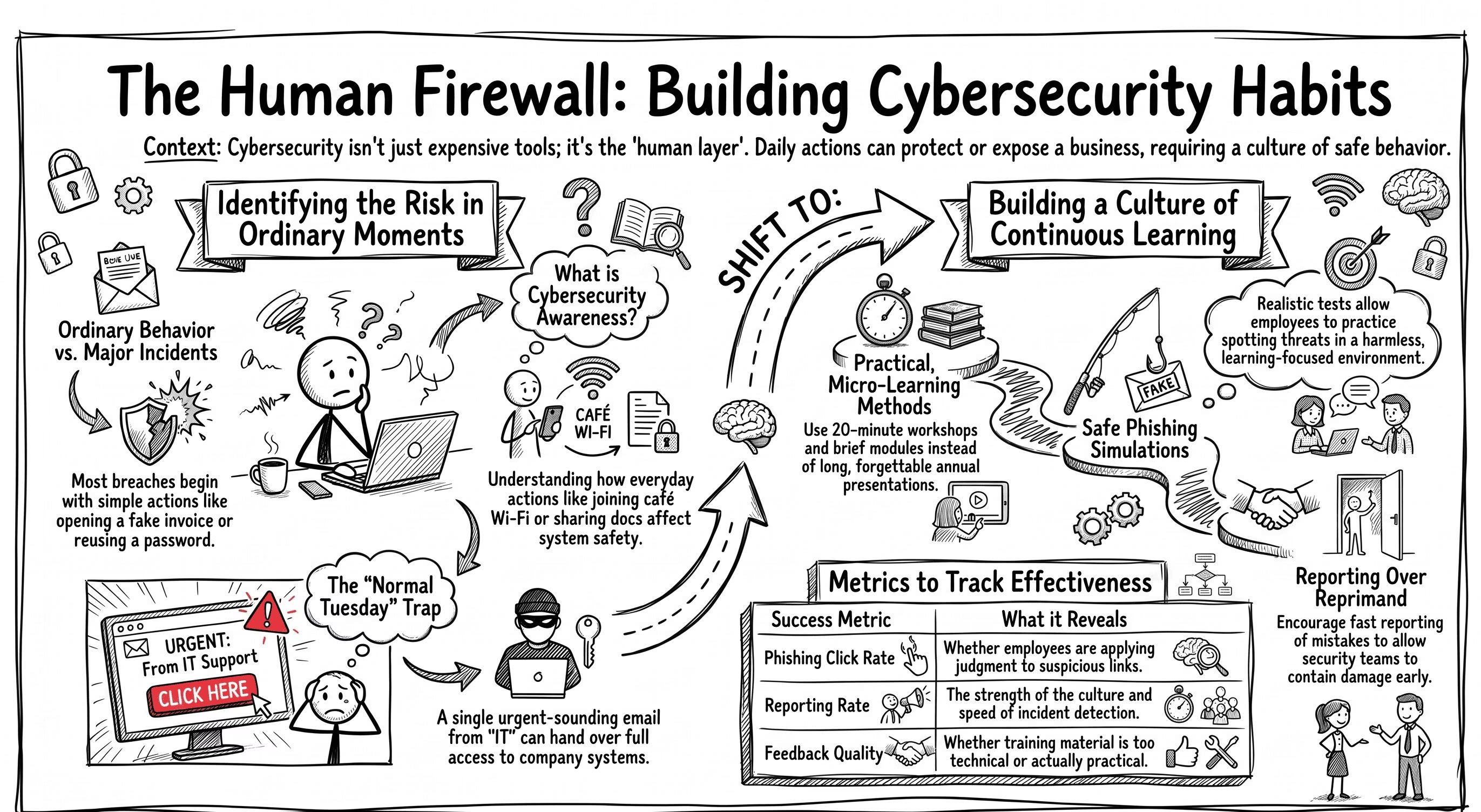
That sounds simple, but the real value shows up in daily work. An employee opens an email attachment, shares a document, joins a video call, or logs in from a café Wi-Fi network. Each of those actions can either protect the business or expose it.
Most cyber incidents do not begin with dramatic movie-style hacking. They begin with ordinary behavior. A fake invoice gets opened. A password gets reused. A login page looks real enough. Someone is in a rush, and that is all an attacker needs.
Picture a normal Tuesday morning. A team member receives an email that appears to come from IT. It says their password will expire today and asks them to sign in right away. The branding looks familiar. The tone feels urgent. They click without thinking twice.
That single moment can hand over access to company systems.
This is the reason awareness training should never be treated like a box-checking exercise. Employees need to understand the real threats they are likely to face, including:
- Phishing emails that imitate trusted brands, vendors, or internal teams
- Social engineering calls or messages designed to pressure someone into sharing information
- Weak or reused passwords that make account compromise easier
- Unsafe browsing habits or risky downloads
- Data handling mistakes, such as sending sensitive files to the wrong person
- Public Wi-Fi use without proper safeguards
When employees can recognize these patterns, they are far less likely to fall for them.
Effective Training Methods
This is where many companies get it wrong. They schedule one long annual training session, send out a policy PDF, and assume the job is done. It rarely works that way. People forget dense presentations. They tune out generic warnings. They remember what feels practical, immediate, and relevant. The best training methods feel connected to real work.
Use short workshops
Short, focused workshops are often more effective than long lectures. A 20-minute session built around recent phishing examples can teach more than an hour of slides packed with definitions. Ask employees simple questions during the session. Would this email make you click? What looks suspicious here? Why is this request risky? That kind of interaction helps people think instead of passively listening.
Use e-learning in small doses
Online training still has value, especially for distributed teams. But it works best when the lessons are brief and specific. A short module on password hygiene. Another on spotting fake login pages. Another on secure file sharing. Small pieces are easier to complete and easier to remember.
Run phishing simulations
Simulations are one of the most practical ways to reinforce awareness. When employees receive a realistic but harmless phishing test, they get to practice in a setting that feels real. If they click, that moment becomes a learning opportunity. If they report it, that behavior gets reinforced. The goal is not to embarrass people. It is to build judgment.
Make the material relatable
Dry training dies fast. Use examples people can picture. A fake courier message after someone ordered office equipment. A message from a manager asking for urgent gift card purchases. A login prompt that appears in a cloud app employees use every day. When examples match real life, employees pay attention.
A few practical ways to make training more engaging:
- Keep sessions short and focused on one theme at a time
- Use screenshots and examples that resemble real threats
- Include quick quizzes or decision-based scenarios
- Refresh examples regularly so content does not feel stale
- Speak in plain language instead of legal or policy-heavy wording
People do not need a technical lecture on threat actors. They need to know what to do when something feels off.
Implementing a Continuous Learning Culture
Training once a year is not enough. Threats change. Tactics shift. People forget. Good security habits need repetition. That is why strong awareness programs are built as an ongoing part of company culture, not a one-time campaign.
Make learning continuous
Regular refreshers help keep cybersecurity visible. That could mean a short monthly tip, a brief quarterly refresher, or a quick alert about a scam currently making the rounds. These updates do not need to be heavy. In fact, lighter touchpoints often work better because people are more likely to read them.
Remove fear from reporting
Here is a big one. If employees think they will be blamed for reporting a mistake, they may stay quiet. That silence creates bigger problems. A suspicious email left unreported can spread across the company before anyone responds. Employees should feel safe reporting anything unusual, even if they already clicked.
That kind of culture matters. Fast reporting gives security teams time to contain damage early.
Get leadership involved
Employees notice what leaders take seriously. If managers ignore training, rush through it, or treat it like a compliance chore, the rest of the company will do the same. But when leadership talks about security in a calm, practical way, people follow that example. Leaders do not need to sound technical. They just need to make it clear that cybersecurity is part of how the business operates.
Useful ways to build awareness into culture include:
- Recognize employees who report suspicious messages quickly
- Share short lessons from real incidents without naming and shaming
- Include security reminders in team meetings when relevant
- Make reporting tools easy to find and simple to use
- Repeat key habits often enough that they become routine
Awareness becomes stronger when it feels normal, not forced.
Measuring Training Effectiveness
A training program should do more than look complete on paper. It should change behavior. That means companies need to measure whether employees are learning, applying good judgment, and improving over time.
Track the right metrics
Start with simple indicators that show whether training is working:
- Phishing simulation click rates
- Reporting rates for suspicious emails
- Training completion rates
- Quiz or assessment scores
- Time taken to report potential incidents
- Repeat mistakes or recurring weak points
These metrics help reveal patterns. If employees finish every training module but still click phishing emails at a high rate, the content may not be practical enough.
Use feedback, not just numbers
Numbers are useful, but they do not tell the whole story. Employees should have a way to ask questions, share confusion, and explain where training feels unclear. That feedback helps improve the program. Sometimes the issue is not a lack of effort. The material may simply be too vague, too technical, or too disconnected from daily tasks.
Improve the program over time
Strong awareness programs evolve. If phishing simulations show employees struggle with fake file-sharing links, build future training around that. If staff frequently mishandle sensitive data, create more examples and guidance around safe sharing practices.
A good program listens, adapts, and gets sharper over time.
Final Thoughts
Educating employees on cybersecurity awareness is not about scaring them or overwhelming them with technical detail. It is about helping people build practical habits they can use during an ordinary workday. Notice the red flags. Pause before clicking. Ask when unsure. Report quickly. Those small actions can prevent very expensive problems. And in many organizations, that human layer is still the difference between a close call and a serious incident.