
No one person. M-22-09 calls for an implementation lead, but that role rarely controls every tool. Pillar owners run identity, endpoint, network, application, and data work, system owners approve access changes, and security operations owns the monitoring signals and response… Read More "A Practical Guide on Zero Trust for Federal Agencies"
Healthcare Zero Trust for Legacy and Connected Systems
Zero trust is assembled from many tools, and NIST’s 2025 practice guide[7] built 19 example architectures with 24 vendors to show it. Fidelis products sit in the detection and verification layer. They don’t set access policy, manage identities, or enforce… Read More "Healthcare Zero Trust for Legacy and Connected Systems"
How Fidelis Network Supports DoD Zero Trust Security
Incident response in a defense setting involves a hard tradeoff. If you fail to contain a genuine intrusion, the attacker can reach more systems. If you act too aggressively on an uncertain alert, you can take down an essential application… Read More "How Fidelis Network Supports DoD Zero Trust Security"
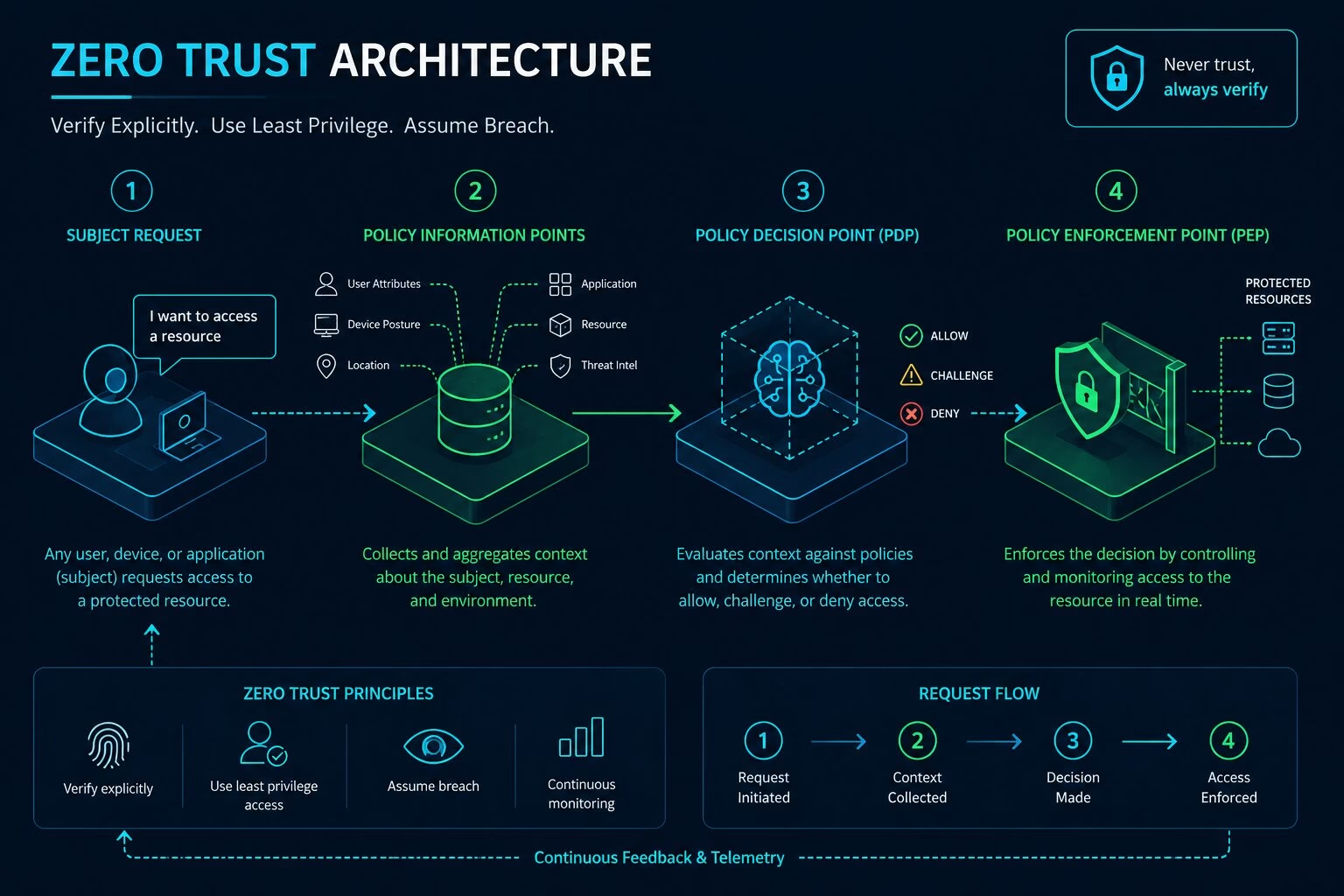
Zero Trust Security Architecture: CISSP & Enterprise Defense
Traditional castle-and-moat network security assumed that everything inside a corporate network perimeter was inherently trustworthy. Modern hybrid environments, remote workforces, and multi-cloud infrastructure have rendered this static perimeter model obsolete. Attackers who gain access through a single compromised credential or… Read More "Zero Trust Security Architecture: CISSP & Enterprise Defense"
Understanding Secure Design Principles in Cybersecurity
Understanding secure design principles is key in one’s preparation for cybersecurity or IT security exams. It’s a core foundation that lays the basis for developing systems that are operational and resilient against threats. The article looks deeper at major secure… Read More "Understanding Secure Design Principles in Cybersecurity"